

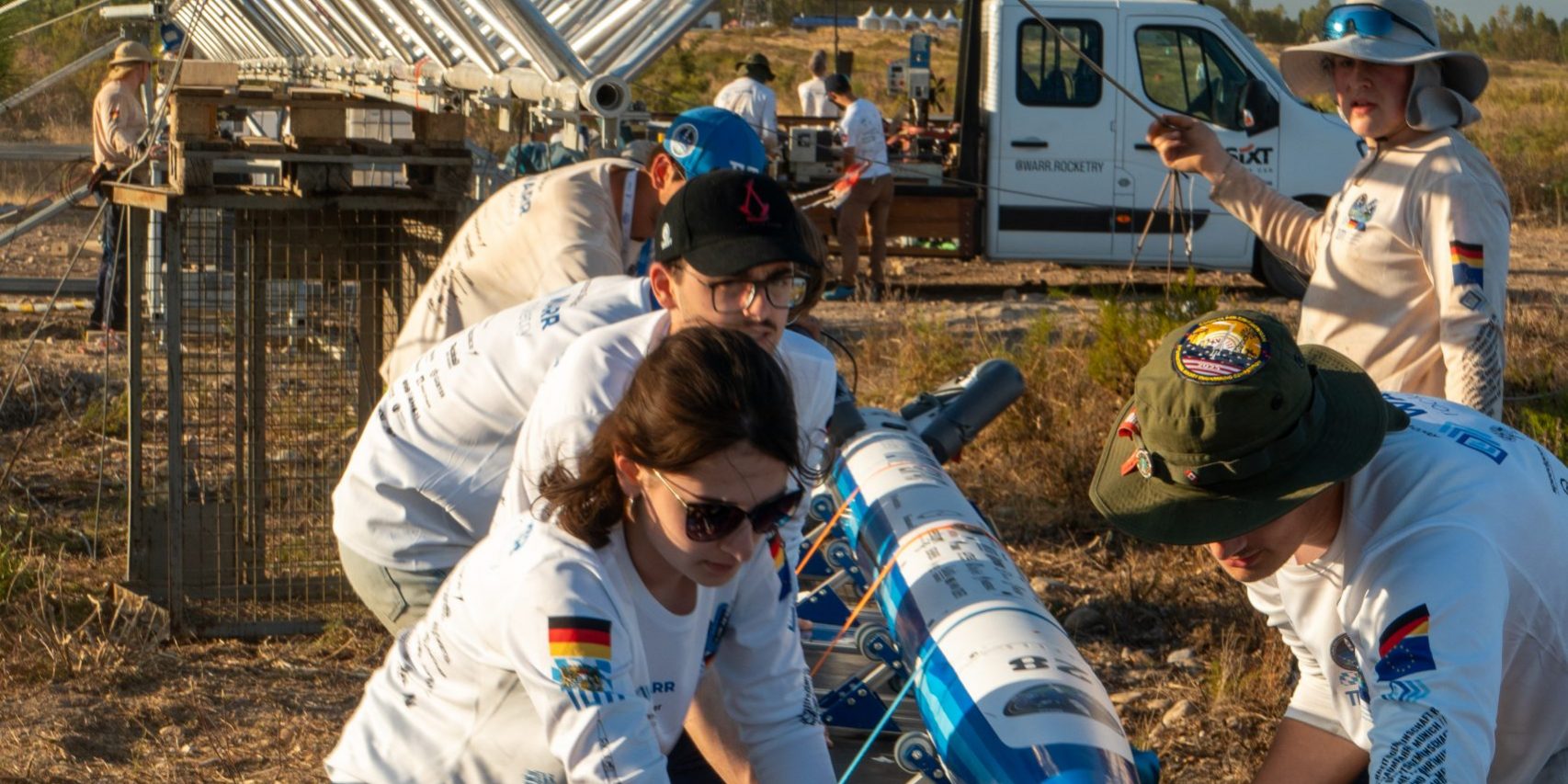
Successful Rocket Launch at the European Rocketry Challenge 2025
Munich students launched a self-developed rocket in Portugal this summer.
The rocketry team of WARR e.V. (Scientific Workgroup for Rocketry and Spaceflight) at the Technical University of Munich was able to develop, test, and launch two sounding rockets this summer.
The approximately 100 students of Project Nixus work on self-developed sounding rockets in addition to their lectures and exams, doing so on a volunteer basis out of a passion for technology. They consistently set new records and celebrate various successes, most recently in 2024 with the launch of Europe’s first student-built cryogenic liquid rocket. This breakthrough served as a foundation for improving the system and familiarizing new team members with the technology. After an intensive one-year development cycle, countless tests, setbacks, and even more progress, the next iteration of the rocket was finally able to compete in the European Rocketry Challenge—a competition organized by the Portuguese Space Agency—with a core team of 25 members and approximately 25 supporters who traveled to Portugal.
After the system was transported from Munich to Portugal by truck, the rocket was carefully inspected on-site and prepared for official certification. Fortunately, the team was the second to undergo the official technical inspection and passed without any objections from the judges—the first milestone on the way to the launch. This was followed by final integration and a deliberate decision to skip the first launch day to optimally prepare for the second and set up the self-developed launch pad.
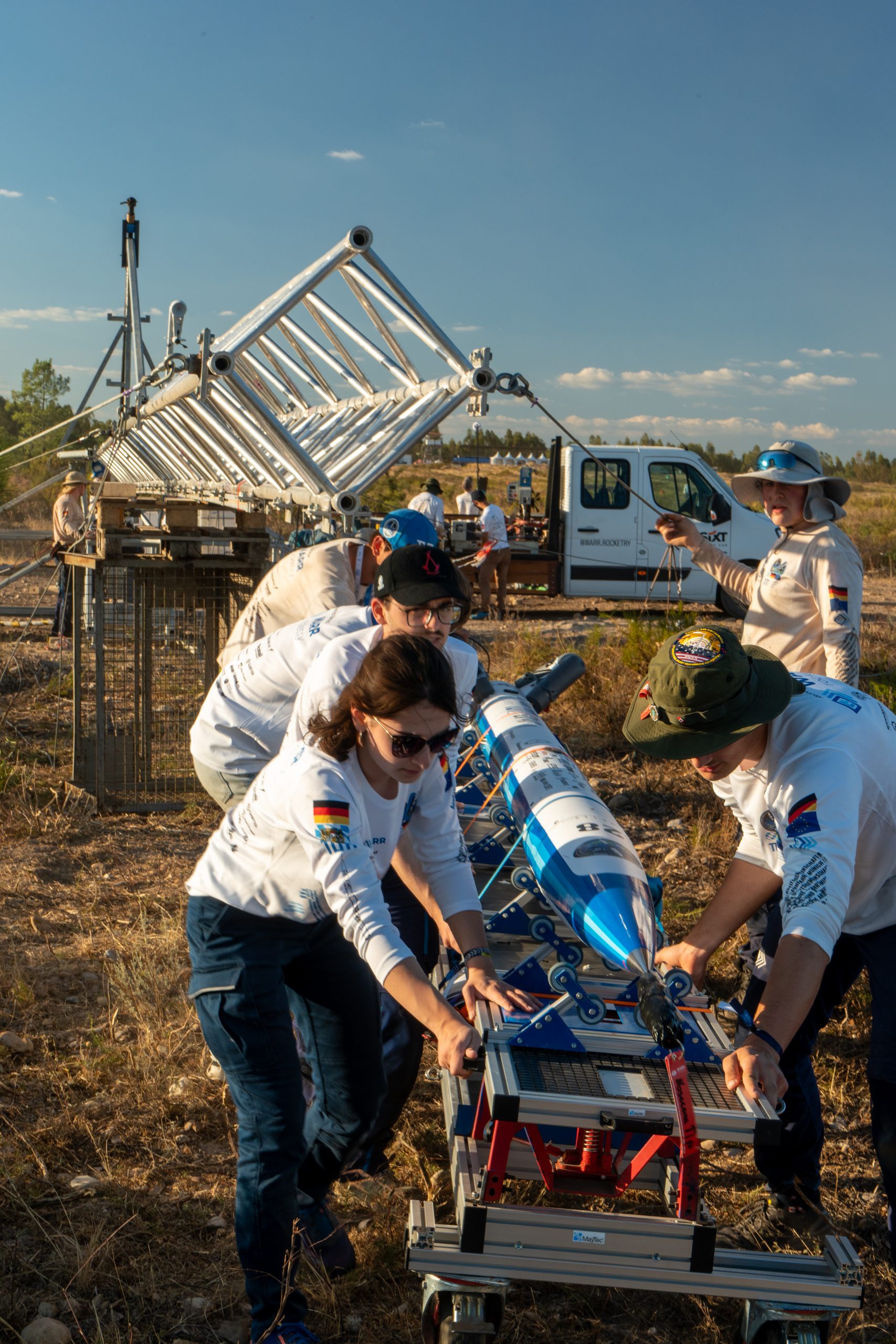
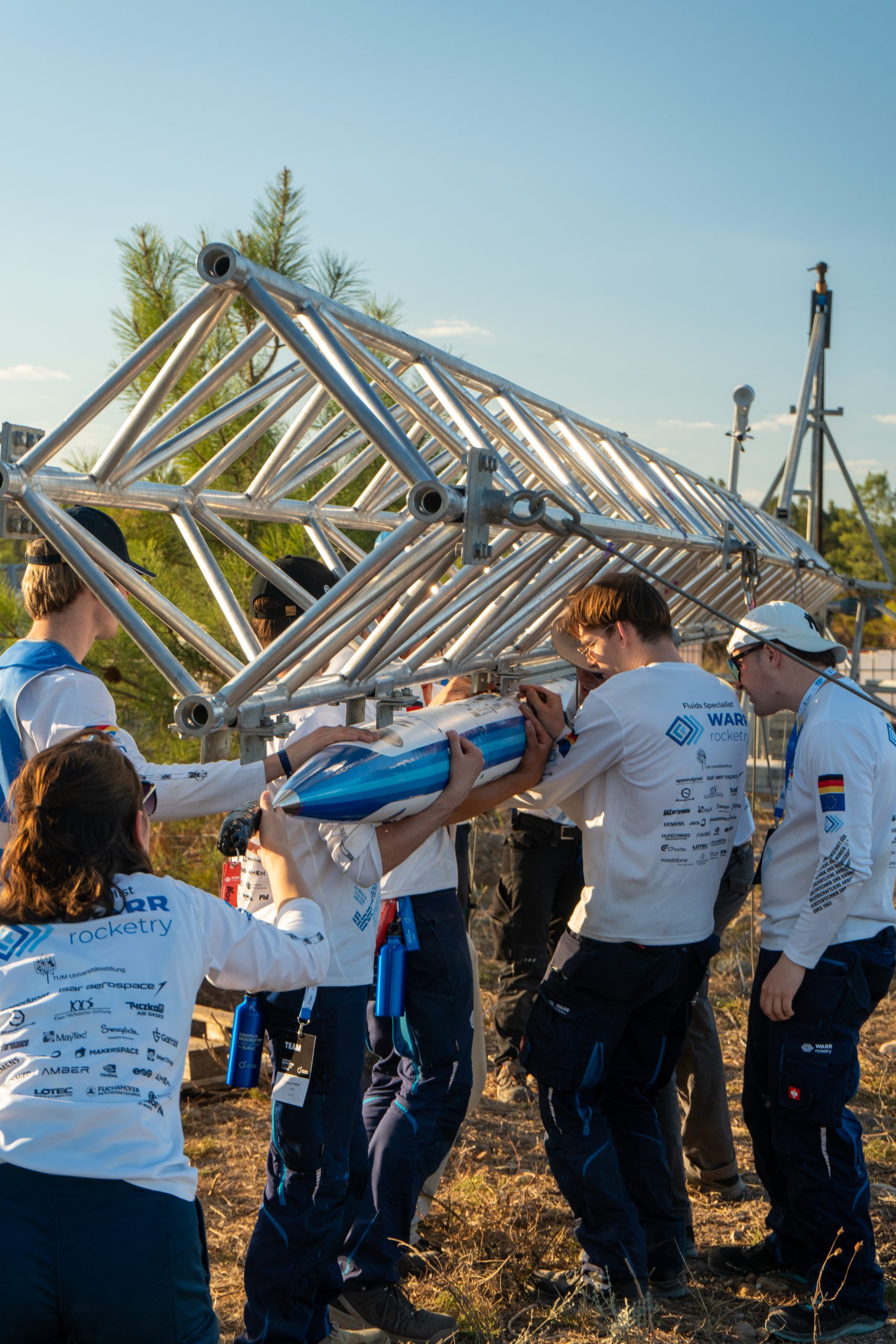
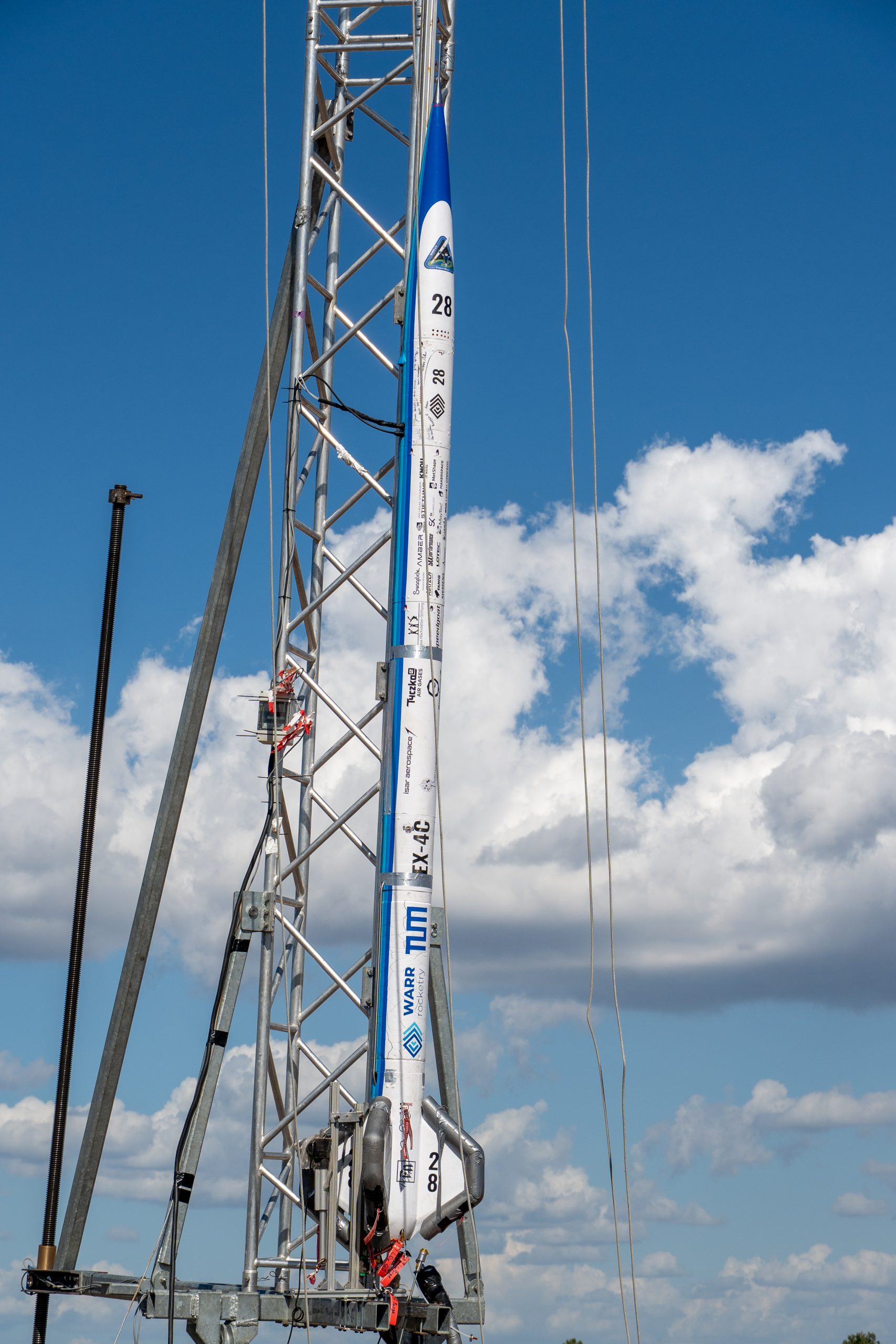
However, as is often the case in aerospace, this project was not without its challenges: unfavorable wind conditions necessitated a comprehensive restructuring of the ground support equipment. The team had to rotate the 24-meter-high launch pad, which took up the second and parts of the third launch day. Nevertheless, a full “wet dress rehearsal” was conducted, during which the entire system was fueled and successfully tested—the final step before the big moment.
Accordingly, the team was back at the launch pad on the final launch day and began preparations. Despite several interruptions by the organizers, everything went according to plan. Around 2:00 PM, the first launch attempt took place, which had to be aborted due to a problem in the propulsion system. After a brief analysis and targeted technical adjustments, the team courageously decided on a second attempt.
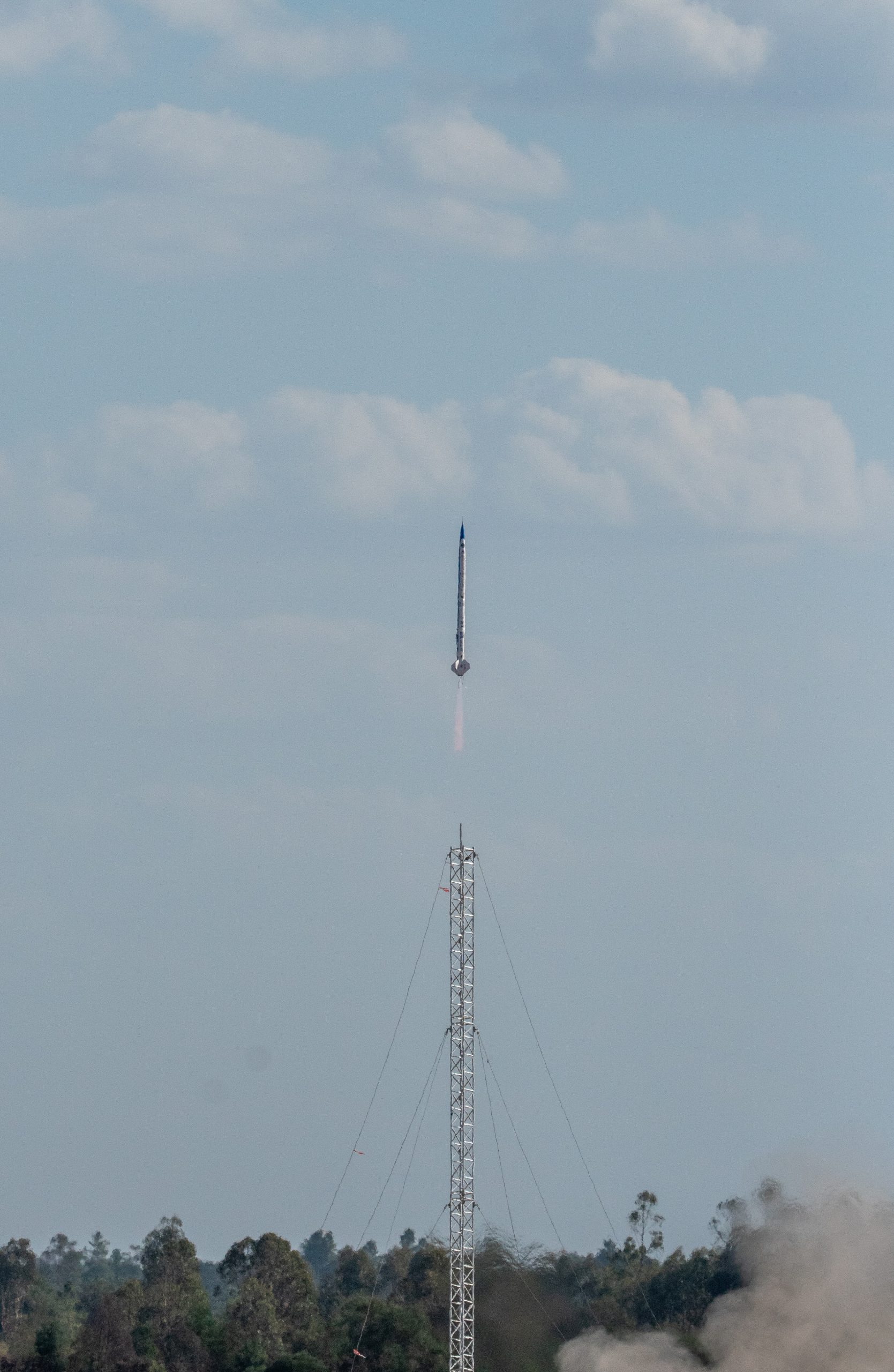
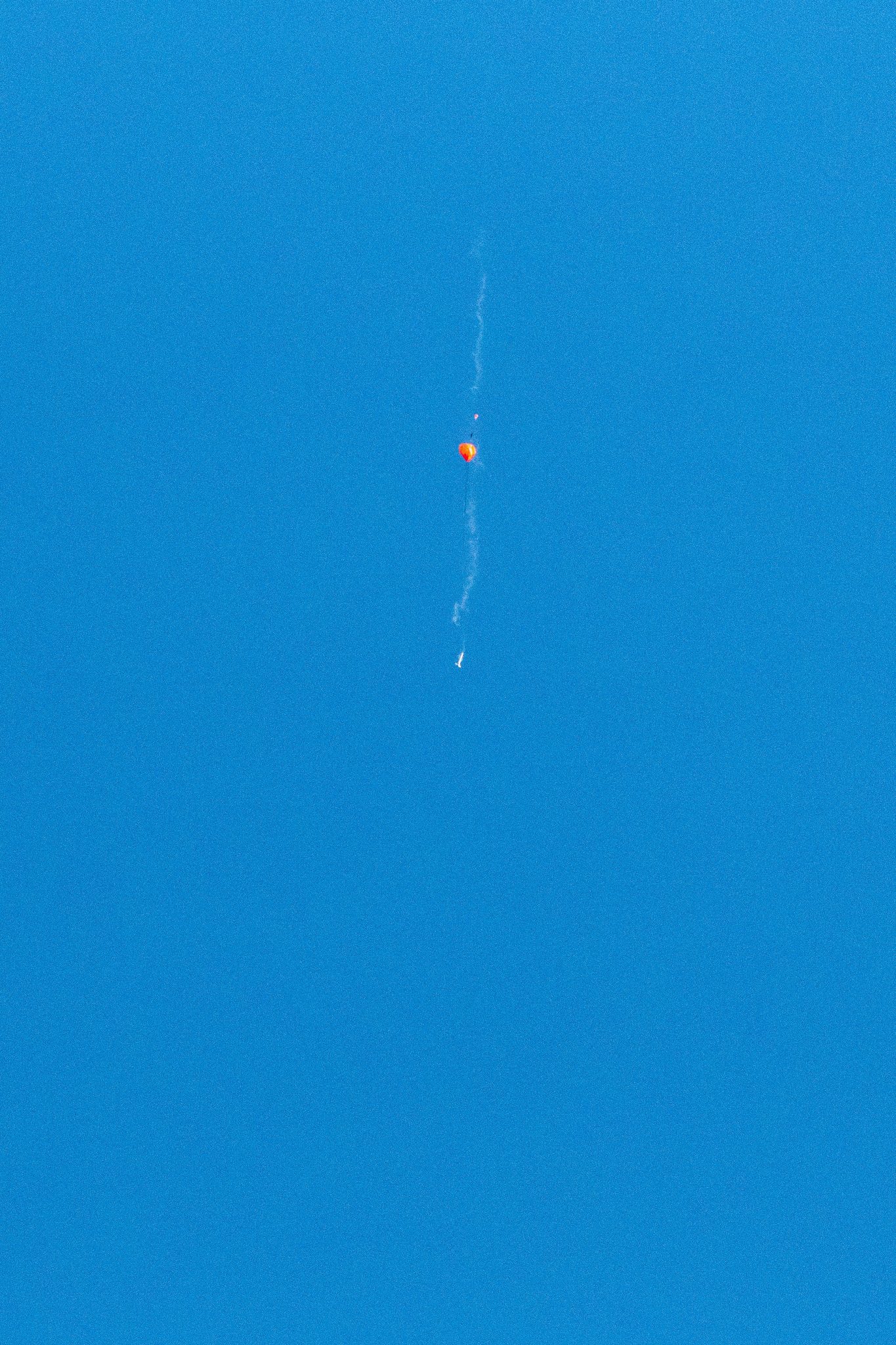
At 3:45 PM local time, the rocket finally took off successfully. Although remaining technical limitations resulted in an achieved flight altitude of 1,487 meters, the joy and relief were immense. Getting the rocket into the air under adverse conditions and with limited resources proves the team’s high degree of professionalism and expertise. The successful launch also marked the conclusion of an intensive development year, during which the team grew enormously—not only technically but also personally and organizationally.
WARR Rocketry would like to sincerely thank the Klaus Höchstetter Foundation for the generous support that made this progress and participation in EuRoC 2025 possible.